Soft Thermoforming Film: It May Have “Thermoforming” in the Name, but It’s Something Entirely Different at Its Core
In medical packaging facilities, there is a material commonly referred to as “soft thermoforming film,” and the associated process is called “soft thermoforming packaging.” When many engineers new to the field hear the term “thermoforming,” images of ovens, aluminum molds, and thick sheets of PVC or PETG being vacuum-formed into rigid blister packs immediately come to mind—and when they apply this understanding to the packaging of gauze pads and adhesive dressings, they often misjudge the process.
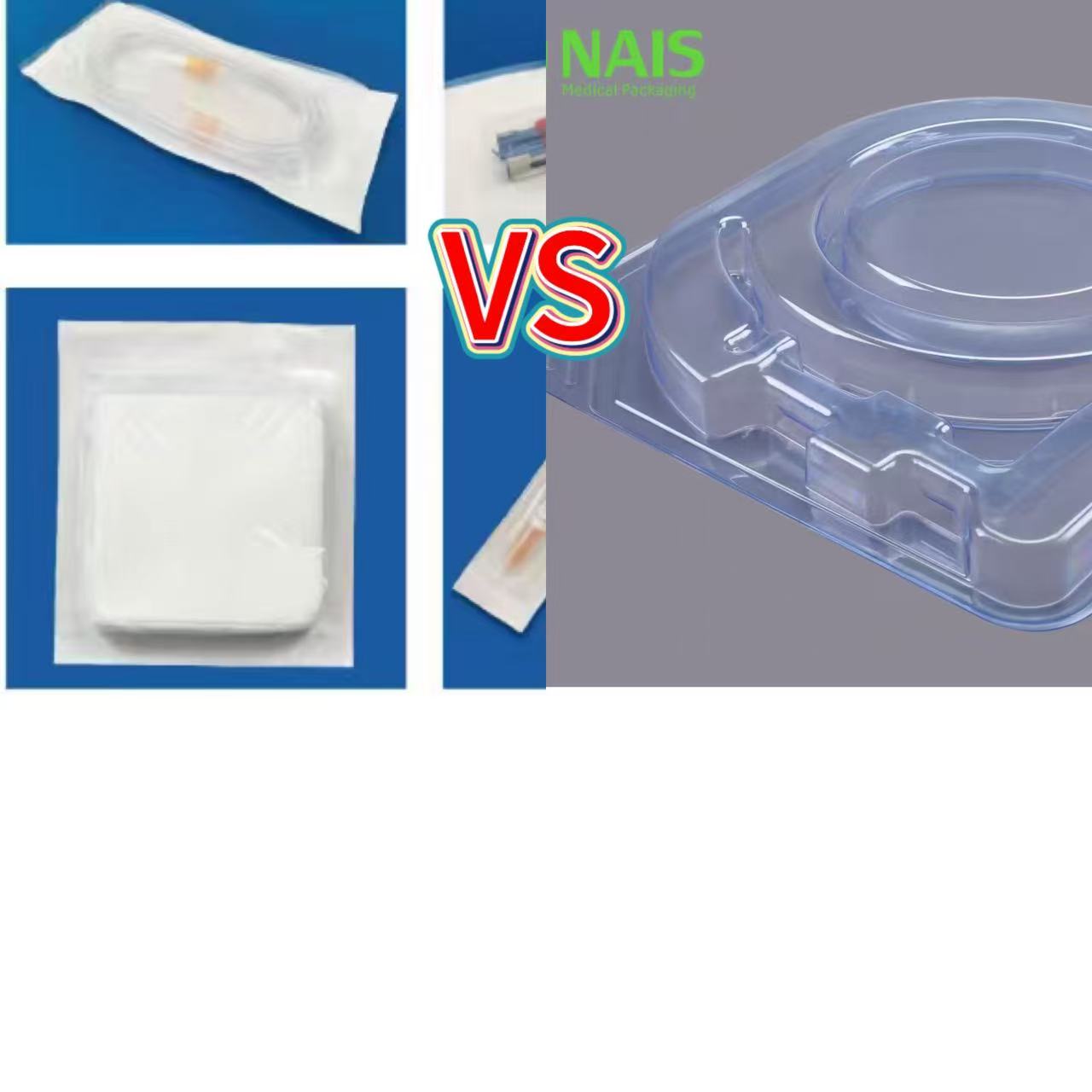
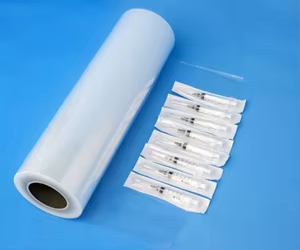
In fact, soft thermoforming packaging film is not used in the traditional sense of thermoforming. It is a plastic film that comes in roll form, typically 0.06–0.35 mm thick (such as PP/PE ,PA/PE film or medical-grade composite soft film). On specialized continuous automatic packaging equipment, it undergoes heating, stretching (vacuum suction or pneumatic forming), filling, heat sealing with dialysis paper or Tyvek paper ,coding, and cutting—all in a single, seamless process to complete the packaging. The industry tends to discuss it alongside rigid thermoforming primarily out of historical convention—while they share the structural logic of “base material forming + top material sealing,” the base material thickness, equipment types, and production line rhythms are entirely different.
I. Why Is It Called “Soft Thermoforming” When It Isn’t Actually Thermoforming?
In traditional rigid thermoforming, sheet thickness typically ranges from 0.4 to 1.5 mm, with materials such as PETG, APET, PS, or even PVC. These sheets are first thermoformed into boxes at an outsourced facility, then the lid material (usually adhesive-coated dialysis paper or coated Tyvek paper) is sealed onto them by the medical device manufacturer using standard heat-sealing equipment, resulting in a two-stage “box + lid” structure.
Soft thermoforming, however, follows a different process: the base film is fed into the machine in roll form, typically 0.06–0.35 mm thick PE stretch film; the top film is 0.05–0.1 mm thick dialysis paper or laminated paper. The entire roll of film is continuously fed into the machine; after being softened by a heating plate, it is shaped into a shallow cavity on the mold via vacuum suction or positive-pressure blowing—the depth of this cavity typically does not exceed 50 mm, and the cavity walls are flexible rather than rigid. The product is placed into the shallow cavity, covered with dialysis paper from above, and the heat-sealing mold closes. Sealing, coding, and cutting are completed simultaneously, resulting in individual or continuous-sheet paper-plastic sterilization packaging.
Key Point: While this process does involve a “vacuum forming” step, the substrate is a roll of soft film rather than a rigid sheet; the resulting product is a flexible shallow cavity rather than a rigid blister shell; and the heat sealing with the dialysis paper is performed continuously inline rather than through post-processing lamination. Therefore, strictly speaking, it more closely resembles a continuous packaging process combining “stretch forming” and “paper-plastic heat sealing,” with “soft thermoforming” being merely a conventional industry term.
Based on substrate thickness and post-forming rigidity, this system can be further classified into two categories: flexible and semi-rigid. The flexible substrate is thinner and softer; after forming, the cavity can deform slightly with the contents, providing good cushioning. The semi-rigid type, on the other hand, has a texture similar to that of a rigid blister pack, offers greater rigidity, and facilitates subsequent cartoning.
II. Why It Is the “Chosen One” for Medical Disposable Packaging
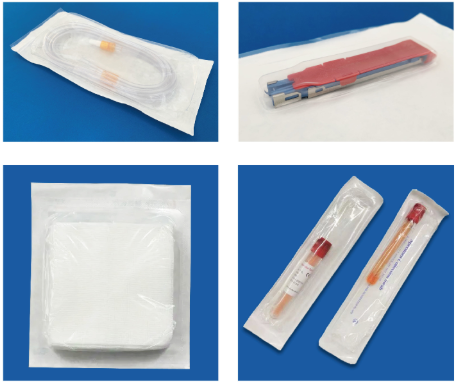
Focus on products such as gauze pads, surgical gowns, medical catheters, syringes, IV sets, and dressings, and you’ll find they share several common characteristics: high production volume, flat or flexible shapes, strict requirements for sterile barriers, and relatively low unit value. Taken together, these characteristics make soft thermoforming—filling—heat sealing systems the ideal solution.
1. High Degree of Automation and Fast Production Pace
Take the mainstream DPB-420/520 soft thermoforming packaging machine on the market as an example. It can continuously and automatically complete the entire process—including PE film heating, vacuum forming, material filling, heat sealing of dialysis paper, batch number printing, longitudinal and transverse cutting, and finished product conveyance—with a production capacity of 6–12 cycles per minute. A single cycle can package 22 1-ml syringes or 40 needles. The LRXS-420 stretch film soft thermoforming packaging machine operates at a frequency of 6–15 cycles per minute, producing 360–900 cycles per hour. Manual packaging simply cannot match this pace.
2. A “Perfect Match” with Dialysis Paper or Tyvek paper
The materials commonly used in soft thermoforming systems are almost exclusively medical dialysis paper or Tyvek—a structure consisting of one side of paper and one side of a composite plastic film that is bacteria-resistant and breathable, complying with relevant standards such as ISO 11607 and GB/T 19633. The product is supported by shallow cavities in the base film, with the dialysis paper sealing the opening. Sterilization methods such as ethylene oxide (EO), steam, gamma irradiation, and plasma can all penetrate the paper surface to complete sterilization, while microorganisms cannot invade in the opposite direction. This is a combination that hard blister packs with lids simply cannot match in terms of cost and efficiency.3. Very Low Cost per Package
Although the equipment requires an initial investment in molds, it operates at scale—once production volume increases, the cost per package is extremely low. This is why soft thermoforming systems are “typically used for high-volume Class I and II medical devices, such as various syringes, gauze pads, surgical gowns, and medical catheters, as well as simple Class III medical devices (such as intravenous indwelling needles).”
4. Excellent Product Conformity
The shallow cavities formed by the soft film conform well to the shape of the contents. They offer good flexibility and are less prone to damage to the sterile barrier due to friction during transportation. For consumables such as gauze, dressings, and catheters—which are “irregular in shape but not sharp”—this level of conformity is something that rigid blister packs simply cannot provide. In the next blog post, we’ll discuss the five key points of the soft thermoforming automated packaging line process.
Automatic Soft Thermoforming Packaging Line: Seven Critical Stages in the Forming Process
How to Choose the Right Mounting Card for Your Medical Device? — A Practical Selection Guide for Procurement and Quality Management